
Coach leaning against squat rack with pen behind ear, golden hour gym background blurred into amber bokeh
5:47 AM

“The athlete who asks why is already stronger than the one who just follows the program.”

Field Notes, Week 312

A blog about the long game

Strength is a practice, not a product.

Ten thousand sessions in — essays for coaches, owners, and athletes who want the why behind the reps.

Read the First Letter
Morning — Philosophy

Where the day begins
before the clients do.

Empty barbell on rack in early morning gym, warm light streaming through windows
Philosophy6:15 AM

On the Difference Between Training and Exercising

Exercise asks the body to perform. Training asks it to adapt. The distinction sounds semantic until you watch a client plateau for six months because no one ever told them the difference. Exercise is the thing you do. Training is the thing you become.

Training asks the body to adapt. Exercise only asks it to perform.

Open notebook with handwritten notes beside a mug of coffee on a gym bench
Journaling7:02 AM

What I Write in the First Five Minutes Before Any Client Arrives

Before the door opens, before the warmup, before the check-in question — I write three sentences. What I noticed last session. What I'm testing today. What I might be wrong about. It takes four minutes and has made me a better coach than any certification I've ever earned.

What I might be wrong about — four minutes that changed how I coach.

Mid-Morning — Programming

The work behind
the work.

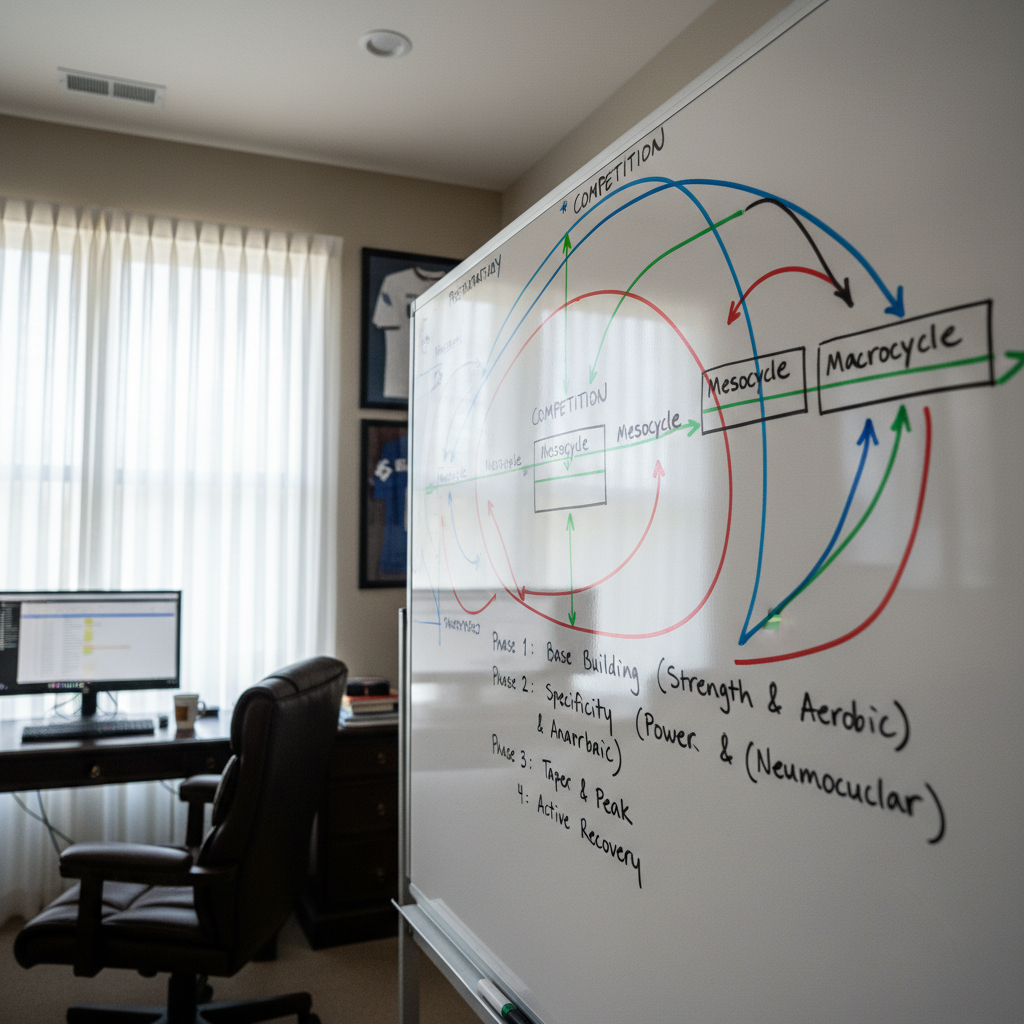
Whiteboard with periodization diagram and handwritten notes in a coaching office
Programming9:30 AM

The 3-Week Cycle Nobody Teaches in Cert Courses

Every NSCA manual talks about periodization in theory. Nobody tells you what to do when your athlete misses Tuesday, slept four hours, and is three weeks out from a competition that just got moved up. Here is the actual decision tree I use.

Periodization in theory. Adaptation in practice.

Method10:15 AM

Why I Stopped Writing Percentages on Programs

Percentages are a proxy for effort. Effort is what we actually want. After seven years of writing “75% 1RM” on programs, I switched to RPE and my clients got stronger — not because RPE is magic, but because it made them pay attention.

7 yrsbefore the switch to RPE
Philosophy

The Rep You Don't Write Down

The most important data point in any session is the one the athlete doesn't report. The hesitation before the third set. The exhale that comes a beat too early.

— the data we feel
Strength training program pages laid out on a wooden desk with coffee and pencil
Framework

Download: The Programming Framework

A 12-page PDF distilling the decision-making system I use across 40+ active clients — load management, fatigue flags, deload triggers, and the conversation templates I use when the plan needs to change.

Download Free PDF →
Afternoon — Client Stories

The essays that take
the longest to write.

Woman performing deadlift in a warmly lit gym, focused expression, natural light from window
Client Essay
2:15 PM

The Woman Who Came in for Weight Loss and Left with a Deadlift

She told me in the intake form she wanted to lose 15 pounds before her daughter's wedding. That was three years ago. She never lost the weight. She did, however, pull 185 pounds off the floor last March, walk her daughter down the aisle, and cry in the parking lot afterward — not about the scale, but about what she had become. This is not a before-and-after story.

She never lost the weight. She gained something the scale doesn't measure.

Coach and athlete in quiet conversation beside a barbell rack, late afternoon light
Craft
3:40 PM

What Coaching Taught Me About Listening to Silence

The most useful thing a coach can do in the first session is not explain the program. It's notice which questions the client doesn't ask. The things left unsaid — the injury they mention once then never again, the goal they state with no emotion — those are the whole map.

The questions they don't ask are the whole map.

10,000+Sessions logged
8 yrsFull-time coaching
40+Active clients
3Certifications held
Evening — Letters & Frameworks

Take something
with you when you go.

Two ways in. One weekly letter. One framework PDF. Both free, both earned.

Read the First Letter

Weekly essay · No ads · Unsubscribe anytime

Every Sunday, one essay lands in your inbox. Programming breakdowns, training philosophy, coaching craft — written like a letter, not a broadcast. The first one is called “Why I Stopped Chasing Optimal.”

No credit card. No spam. Just the work.

Download the Programming Framework

Free PDF · 12 pages · Instant delivery

The decision-making system behind 40+ active client programs. Load management, fatigue flags, deload triggers, and the conversation templates I use when the plan needs to change mid-cycle.

  • Weekly load calculation worksheet
  • Fatigue flag checklist (12 indicators)
  • Deload trigger decision tree
  • Client conversation script templates
“The notebook is always open. You're welcome to look over my shoulder.”

— Pulse, since 2017